The Complete Guide to Refrigeration Monitoring
A practical guide to refrigeration monitoring, covering how it works, remote monitoring, fault detection and reliable system performance.
Refrigeration monitoring provides information about equipment operation, helping businesses track temperatures, identify potential problems and make informed decisions about maintenance and energy efficiency.
Modern monitoring technology can also provide remote access to system information, giving operators and engineers greater insight without needing to be physically present at the installation. This guide explains how refrigeration monitoring works, the benefits it offers and what businesses should consider when selecting a monitoring solution.
What is Refrigeration Monitoring?
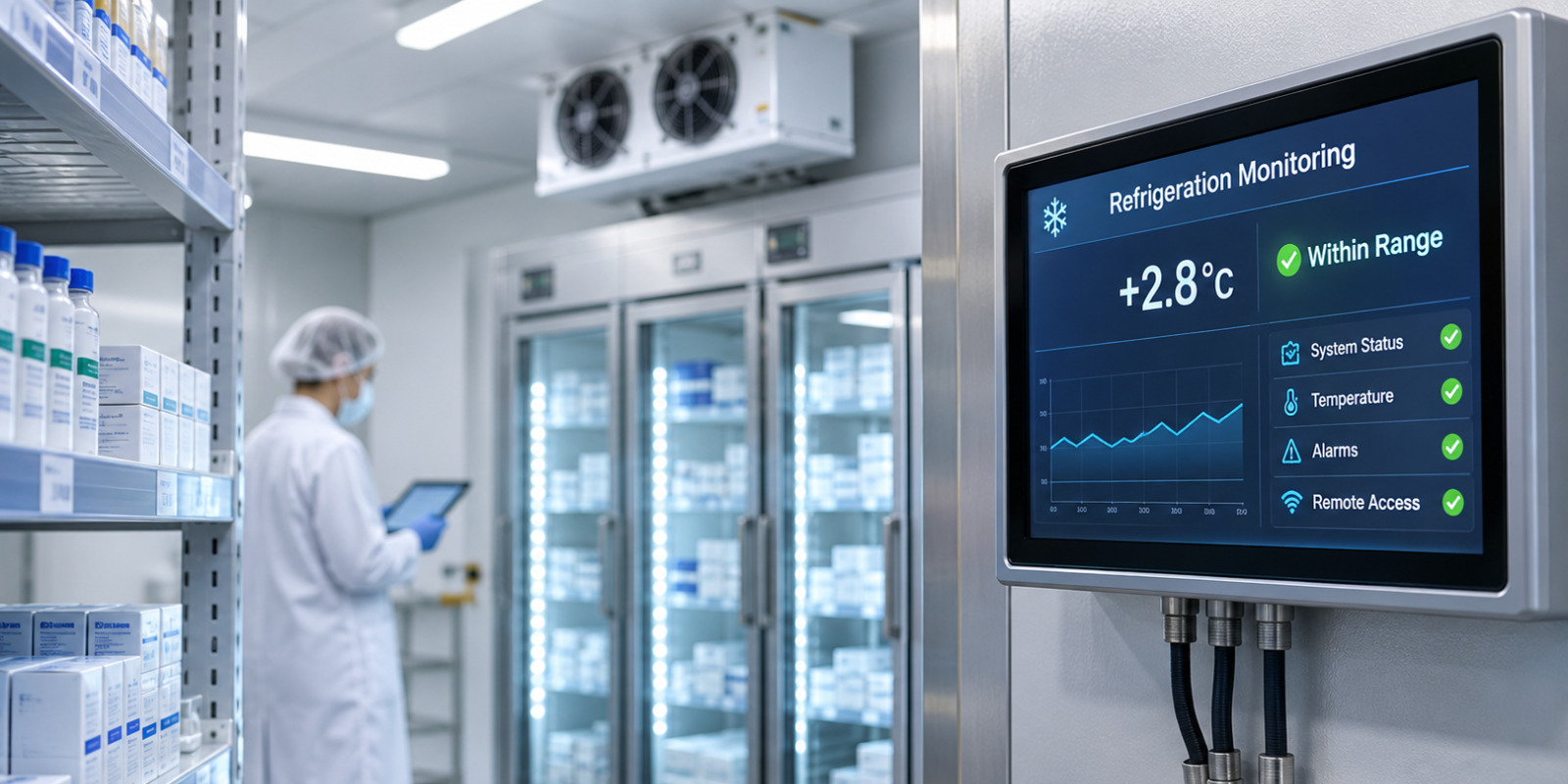
Refrigeration monitoring is the process of collecting, recording and reviewing information about the operating conditions and performance of refrigeration equipment.
At its simplest, monitoring may involve checking temperatures within a refrigerated cabinet or cold room. More advanced systems can collect information from multiple components, providing a broader picture of how the entire refrigeration system is operating.
Depending on the equipment and monitoring technology, the information available may include:
- Temperature - Tracking conditions within refrigerated spaces and identifying changes outside the required range.
- Pressure - Monitoring operating pressures to help assess system performance.
- Compressor Operation - Recording running times, operating status and changes in equipment behaviour.
- Energy Consumption - Measuring electricity use to identify trends and potential inefficiencies.
- Alarms and Faults - Identifying abnormal conditions that may require investigation.
- System Performance - Collecting operating data that helps engineers assess equipment condition over time.
Why is Refrigeration Monitoring Important?
Refrigeration equipment can operate for thousands of hours each year, often with limited direct supervision. During that time, developing faults or changes in operating conditions may not be immediately apparent. Without effective monitoring, a problem might only become obvious when temperatures rise, stored products are affected or equipment stops working.
Monitoring gives businesses greater visibility of their refrigeration systems, helping them recognise unusual operating patterns and respond to potential problems sooner. This is particularly important in food retail, food processing, cold storage and pharmaceutical applications, where maintaining appropriate temperatures is essential.
The aim is not simply to collect more information. It is to make that information useful in maintaining reliable refrigeration performance.
How Does Refrigeration Monitoring Work?
Refrigeration monitoring systems use sensors, controllers and software to collect and communicate information about equipment operation.
Temperature sensors, pressure transducers and other devices provide readings that can be recorded, displayed or transmitted to a monitoring platform. Depending on the system, operators may be able to view current conditions, examine historical data and receive notifications when equipment operates outside predefined limits.
Hubbard uses control and monitoring technology from established manufacturers including Danfoss, CAREL and Resource Data Management (RDM) within its manufactured refrigeration systems.
For larger installations, Hubbard can also develop its own software to support the particular control requirements established by its design teams. This allows system operation to be adapted to the equipment and application, with opportunities to improve energy efficiency.
Temperature Monitoring and Data Logging
Temperature monitoring is one of the most important functions of any refrigeration monitoring system. Refrigerated products often need to remain within specific temperature ranges throughout storage and handling. Monitoring helps operators identify temperature changes and investigate conditions that may affect product quality.
Data logging provides a historical record of temperatures rather than relying entirely on manual checks. This can be useful when investigating recurring problems or demonstrating that suitable storage conditions have been maintained.
For businesses handling temperature-sensitive products, recorded information may also support quality assurance procedures and relevant regulatory requirements. The accuracy of this information depends on appropriate sensor positioning, calibration and the way readings are recorded and reviewed.
What is Remote Refrigeration Monitoring?
Remote refrigeration monitoring allows authorised users to access information about refrigeration equipment without being physically present at the installation.
Depending on the monitoring system, this may include viewing operating temperatures, checking equipment status, reviewing alarm histories and examining performance data.
Remote access can be particularly valuable for businesses operating multiple refrigeration installations or sites, allowing operators to review system information from another location.
The control and monitoring systems used by Hubbard support remote monitoring, allowing refrigeration performance to be viewed off site. The information available and the way it is accessed will depend on the particular equipment, control system and installation.
Refrigeration Monitoring, Alarms and Fault Detection
One of the main advantages of refrigeration monitoring is the ability to recognise changes that may indicate a developing problem.
A temperature deviation might be the most obvious warning, but other operating information can also be valuable. A compressor running for unusually long periods, recurring pressure alarms or changes in system behaviour may also suggest that further investigation is needed. Monitoring systems can help identify these conditions and, where configured, provide alerts to operators or maintenance teams.
Historical information can also help engineers understand when a problem developed and whether similar conditions have occurred previously.
However, monitoring does not automatically prevent equipment failure. Alarm settings must be appropriate, notifications need to reach the right people and there must be a process for responding when attention is required.
Refrigeration Monitoring and Maintenance
Routine maintenance remains essential for reliable refrigeration operation, but monitoring can provide additional information to support maintenance decisions. By reviewing operating data over time, engineers may identify changes that suggest equipment is no longer performing as expected.
Repeated alarms, increasing compressor running times or unusual temperature patterns could indicate that part of the system needs attention. This information can help maintenance teams investigate recurring problems, prioritise inspections and make more informed decisions about servicing.
Monitoring does not replace regular maintenance or the expertise of refrigeration engineers. It is an additional tool that provides valuable information that can make maintenance more targeted and effective.
Refrigeration Monitoring and Energy Efficiency
Refrigeration systems can represent a significant proportion of energy consumption for businesses that depend on temperature-controlled storage and processing.
Monitoring can help identify operating patterns and potential inefficiencies, such as equipment running for longer than expected, recurring faults or changes in energy consumption. Where suitable data is available, businesses can compare performance over time and assess the effects of maintenance or changes to operating conditions.
Hubbard's ability to develop software for larger refrigeration systems is particularly relevant here. By adapting control strategies to the requirements of a specific installation, the system can be managed in a way that supports efficient operation.
Monitoring itself does not reduce energy consumption. The benefit comes from using the information collected to make appropriate decisions about equipment operation and maintenance.
For more information about how controls influence refrigeration efficiency, read our Complete Guide to Commercial Refrigeration Controls.
Refrigeration Monitoring Across Different Applications
Monitoring requirements vary depending on the refrigeration application.
Commercial Refrigeration
Supermarkets, convenience stores, restaurants and other commercial premises may operate several refrigerated areas with different temperature requirements. Monitoring helps operators maintain visibility of these systems, identify temperature deviations and review equipment performance.
Industrial Refrigeration
Larger industrial installations [Link to new Industrial page] can involve multiple refrigeration circuits, substantial cooling loads and complex operating requirements. Monitoring provides information about different parts of the installation, supporting maintenance planning and performance assessment. For these applications, integrating monitoring with control strategies developed around the specific installation can be particularly valuable.
Transport Refrigeration
Monitoring is also important in temperature-controlled transport, where refrigerated goods must remain within suitable conditions throughout their journey. Hubbard's Z120b electric refrigeration unit, for example, provides real-time monitoring through an in-cab interface and is compatible with telematics systems.
Making Better Use of Refrigeration Monitoring Technology
Modern refrigeration monitoring systems can provide considerable amounts of information, but their value depends on how effectively that information is used.
One issue identified by Hubbard's technical team is that end users do not always take full advantage of the capabilities available within their control and monitoring systems. A business may have access to historical performance data, alarm information and remote monitoring functions without regularly reviewing or using them. This can mean opportunities to identify developing problems, improve maintenance or investigate energy consumption are overlooked.
Making better use of monitoring technology starts with understanding what information is available, who needs access to it and how it can support day-to-day decisions.
Choosing the Right Refrigeration Monitoring Solution
There is no single monitoring solution suitable for every refrigeration application.
The appropriate approach depends on the equipment, operating requirements and information needed by the business. Important considerations include:
- The type and number of refrigeration systems being monitored.
- The temperatures and operating conditions that need to be maintained.
- Compatibility with existing refrigeration equipment and controls.
- The information required by operators and maintenance teams.
- Remote access and alarm notification requirements.
- Historical data recording and reporting.
- Energy monitoring requirements.
- The ability to accommodate future equipment or system changes.
It is also important to consider how the monitoring system will be managed. Clear responsibilities for reviewing information, responding to alarms and maintaining the equipment are essential.
Refrigeration Monitoring as Part of the Complete System
Effective refrigeration monitoring depends on the equipment being monitored and how the information collected is used. Sensors, controllers, compressors, condensers, evaporators and other refrigeration components all contribute to overall system performance. Monitoring provides visibility of operating conditions, while appropriate controls, system design and maintenance influence how effectively the equipment operates.
Hubbard supplies commercial refrigeration solutions for a wide range of applications.
Considering monitoring requirements alongside equipment selection, system design and ongoing maintenance helps businesses make better use of their refrigeration systems over the longer term.
Talk to Hubbard About Commercial Refrigeration Monitoring
Choosing the right refrigeration monitoring approach starts with understanding the equipment, operating conditions and information needed to manage the system effectively.
Whether you're planning a new refrigeration installation, upgrading existing equipment or looking to make better use of your monitoring capabilities, Hubbard can help you consider monitoring and control requirements as part of the complete refrigeration solution. Talk to Our Team